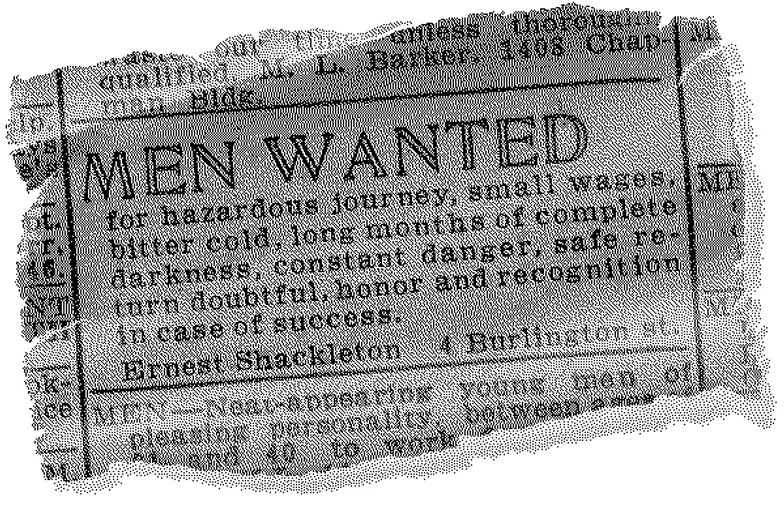
"You can always buy more tokens, not more time."
Listen on sovereignengineering.io
Pablo and Gigi start with the FIPS map: the strange pleasure of seeing a protocol become a place, with nodes scattered across the world, Archipelago getting faster through a FIPS connection, and Nostr VPN quietly pulling more people into the mesh. From there the conversation turns into a familiar No Solutions pattern: if you try to make one global thing, you usually fight the design. FIPS works better as locality. Nostr works better as locality. There is no global.
The second half becomes an agent-swarm walk through Buzz, NIP-29, Mosaico, proactive context, and the difference between coordination and awareness. Buzz packages a lot of things together: rooms, agents, Git-like collaboration, ACP harnesses, and Nostr identities. Mosaico tries to stay much smaller: a shared-awareness fabric where agents see enough of the other work happening around them to find relevance by themselves.
The trade-off underneath both projects is the same one that keeps showing up everywhere now: more instructions can make agents obedient but brittle, while too little structure leaves them blind. Somewhere between micromanagement and chaos is the place where local intelligence starts to coordinate.
In this dialogue:
- why seeing the live FIPS map was more inspiring than expected
- how nostr-vpn and FIPS turn network participation into something more tangible
- why FIPS and Nostr both make more sense as local-first systems than as one giant global state machine
- why freedom-tech projects do not need Silicon Valley scale metrics to matter
- how Buzz packages a Nostr relay, NIP-29 rooms, agent harnesses, Git-style workflows, and human-agent collaboration into one workspace
- what changes when agents have pubkeys, signed actions, and a cryptographic paper trail instead of pretending to be whichever human launched them
- why NIP-29 is an acceptable trade-off for some team and agent channels even though it is not encrypted
- how trust boundaries, hosted relays, local deployment, and organizational context shape the security model
- why "more autonomous agents" really means agents that can make better local calls without burning human time
- how Pablo thinks about persistent agent identity, throwaway workers, higher-level roles, and the "Pablo replica" pattern
- why too many explicit instructions can remove agency and recreate a brittle workflow engine
- how Mosaico gives agents awareness without becoming an orchestrator
- why workspaces, one-line status, subchannels, mentions, and narrow context hints can be enough for agents to find each other
- how proactive context tries to keep the actual user input as the source of truth instead of letting a memory layer hallucinate intent
- why "no context" is better than bad context
- how Napplets, Amethyst, Blossom, Outbox, and composable clients rhyme with the same move away from one cathedral-sized application
Related dialogues:
- #18: Rewriting TENEX w/ Pablo
- #19: Romantically Shitting on Paywalls w/ Pablo
- #11: 10x Less Productive w/ Pablo
- #20: Archipelago Meshtadels w/ Shadrach
- #25: White Noise, MLS, and marmot w/ Jeff G
- #30: Napplets w/ Sandwich
People mentioned:
Projects & tech mentioned:
- FIPS
- nostr-vpn
- Archipelago
- Buzz
- Block Engineering: Buzz
- Mosaico
- proactive context
- Nostr
- NIP-29
- NIP-17
- ACP
- Goose
- Claude Code
- Codex
- OpenCode
- Hermes
- ChatGPT
- MCP
- 10x
- Tenex
- Napplets
- Amethyst
- Blossom
- Outbox
- NMP
Recorded at 959,531.